
Comox Valley Project Watershed Society KEEPING IT LIVING AWARD
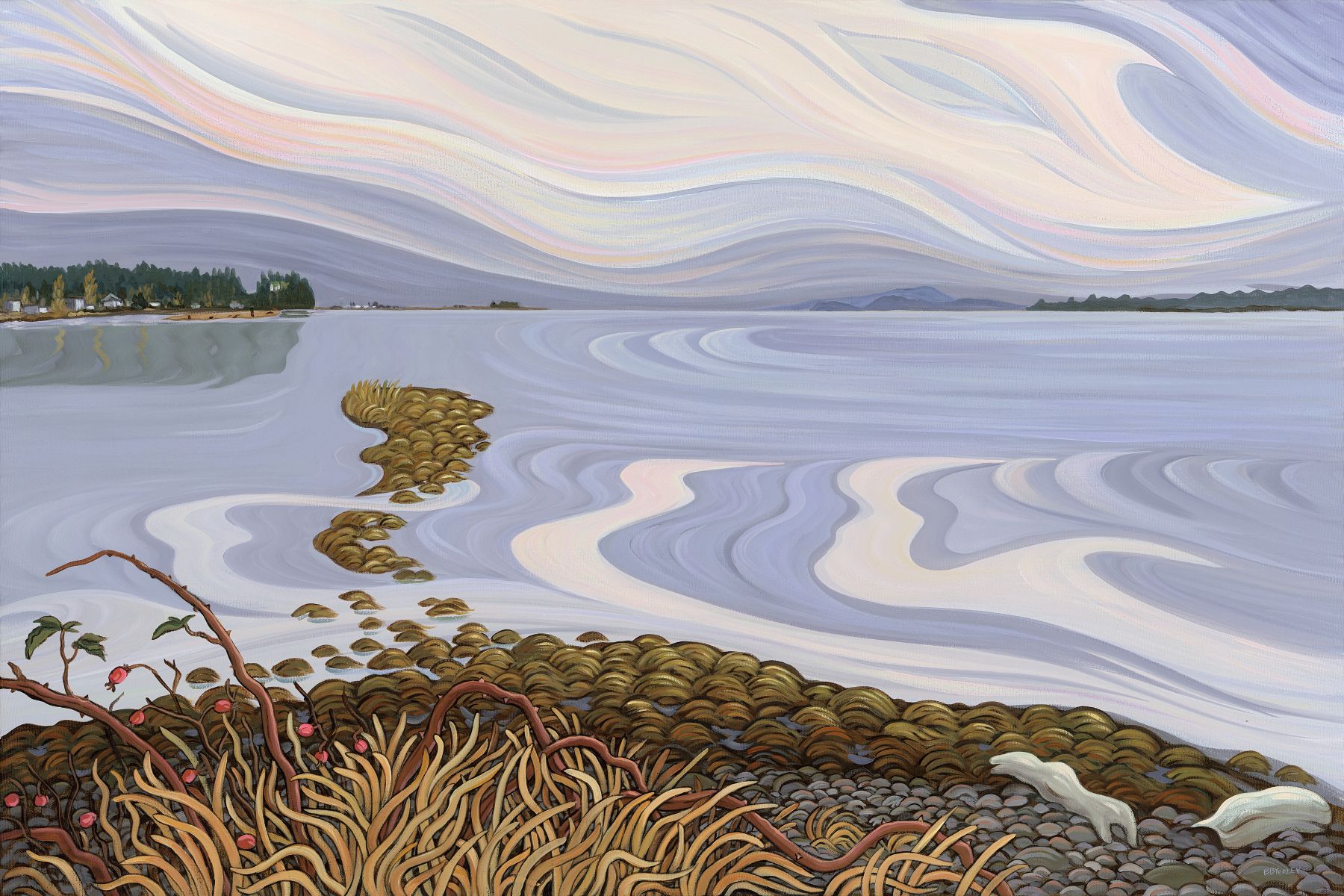
The Award, an original painting of the estuary by noted local artist Bev Byerley, is given annually to an organization in the Comox Valley in recognition of environmental leadership provided in protecting and restoring the estuary. The recipient displays the painting in a prominent place for a period of one year.
The City of Courtenay has been chosen in recognition of the action taken this past year in hiring their first Environmental Planner and their first Climate Change Specialist. The efforts of these two planners in organizing an evening presentation on Climate Change at the Sid Williams Theatre last spring acknowledged the city’s awareness and appreciation of this important environmental issue. Three hundred local residents were superbly informed regarding one of the most pressing global concerns of this century and one of particular importance to a coastal community such as ours.
The City also held a workshop on sea level rise in the Strait of Georgia and subsequently established a new high water mark for the Courtenay River and Estuary based on a projected increase in sea levels of .8 metres expected over the next twenty to thirty years. Further, the City recently introduced new draft amendments to the City’s Official Community Plan that call for improved riparian zones for the rivers, creeks and wetlands within its boundaries. These actions are critical to expanding protection for the Courtenay River Estuary.
Finally, the City has given its support to a community campaign to obtain National Heritage status for the Courtenay River Estuary. This designation is being sought based on the significance of the estuary as an important bird area, for its aquatic habitat and especially for the remains of extensive ancient First Nation fish traps in the estuary.
Related Posts
Mallard Creek Restoration Update for 2024
Restoration work in Mallard Creek will continue this year, including invasive removal, restoring connectivity, and trial planting of a new riparian species. Volunteer events starting in September 2024.
Volunteer at Kus-kus-sum Chamber of Commerce Event
We are showing Kus-kus-sum off to businesses in the Valley through a Chamber Business to Business event. We are looking for a few volunteers to assist with this event.
Coastal Plant Monitoring
Get involved with our new vegetation community science monitoring program!
Spring Field Trips
Throughout May and June Project Watershed will be taking elementary school classes out on field trips to learn about estuary and coastal ecology and to assist with planting and plant maintenance.
Working Together to Identify Forage Fish Spawning Beaches
This year marks the 5th year of a partnership between Comox Valley Project Watershed Society and North Island College on a long-term study to examine intertidal spawning habitats of forage fish in the northern Salish Sea.
Glen Urquhart Update – Spring 2024
Latest news from Glen Urquhart restoration progress for spring 2024.