Invasive species can take over
At an alarming rate
It out-competes other native vegetation due to its effective dispersal mechanisms and ability to shade out slower growing native species. In areas where it has been introduced it will quickly dominate from 50-100% of the site. Since 2004, it is estimated that the amount of RCG in the K’ómoks Estuary has tripled. RCG provides little value for native wildlife and insects, few species will eat it, and it grows too thickly for mammals or waterfowl to use for cover/nesting. Foraging juvenile salmon and trout have feeding opportunities reduced in areas dominated by RCG, and it constricts waterways thus preventing salmon from reaching spawning habitats.
Reed Canary Grass
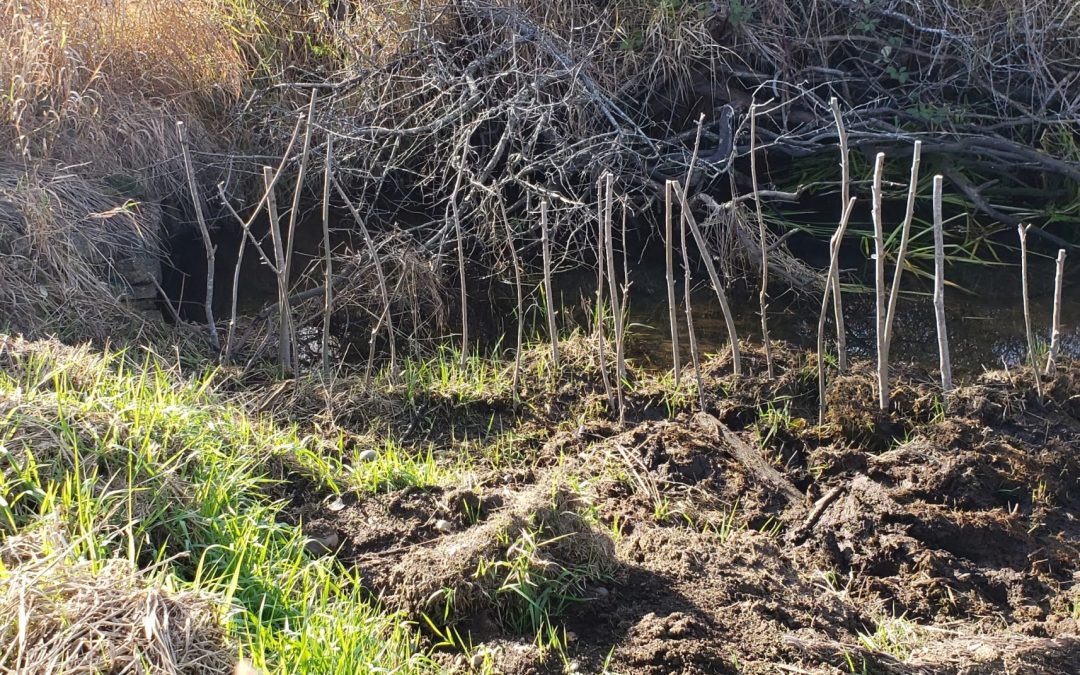
Gaining Ground from Reed Canary Grass along Mallard Creek
On October 23 and 24th, 2020, volunteers helped reclaim 150 meters of streamside along Mallard Creek.
Volunteers Needed for Stream Restoration at Mallard Creek!
Project Watershed needs volunteers to help us harvest willow cuttings, and then plant them alongside sections of Mallard Creek.
Mallard Creek Reed Canary Grass Removal Project
Reed Canary Grass (RCG) is a perennial cool season grass that can grow up to 2 meters tall and expands by creeping rhizomes, vegetative fragments and seeds. It out-competes other native vegetation due to its effective dispersal mechanisms and ability to shade out slower growing native species. In areas where it has been introduced it will quickly dominate from 50-100% of the site.
Project Watershed is Battling Reed Canary Grass
Project Watershed is currently working on a mapping and inventory of reed canary grass in the K’ómoks Estuary. This invasive European cultivar, brought in with agricultural practices, is taking over from native grass species and provides little value for wildlife.
Funders