
Glass Salmon for Kus-kus-sum Displayed at the Old House
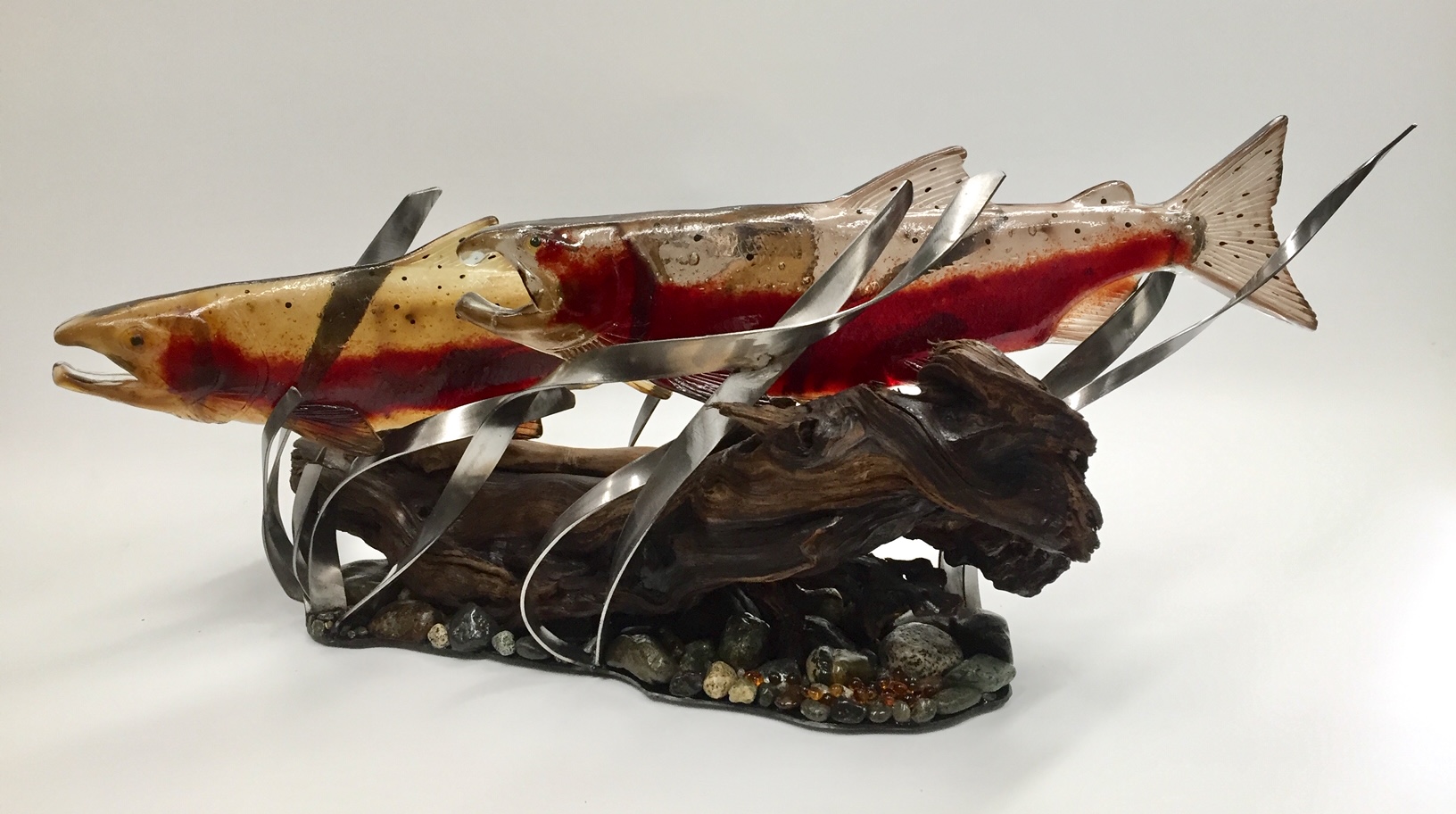
Salish Sea Silvers by Christopher Smith
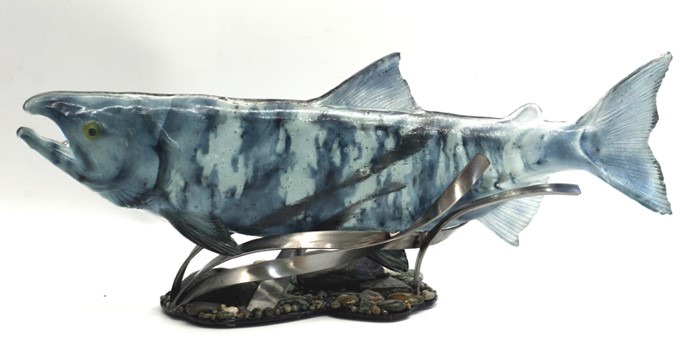
Female Chum by Christopher Smith
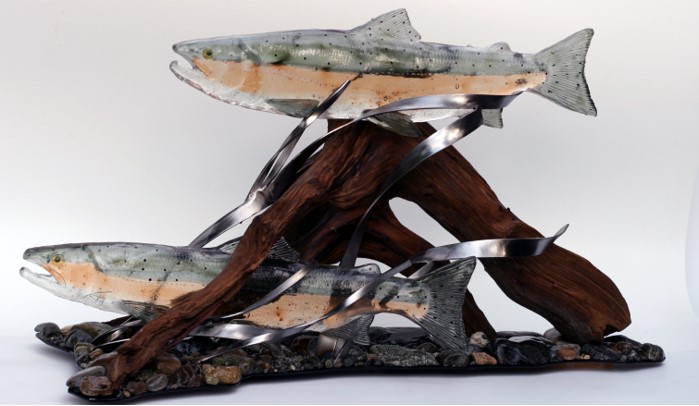
An Anglers Dream by Christopher Smith
The Kus-kus-sum site, which is located directly across the river from the Old House Hotel, was filled and paved for industrial scale sawmill operations which ceased in the early 2000’s. It has recently been purchased and is being resotred to natural habitat by Project Watershed. As this restoration will greatly benefit salmon and other marine species, Chris is donating all proceeds from “Salish Sea Silvers” to the restoration process.
Chris’s kiln cast glass salmon have won awards and are featured in over 10 galleries, resorts, and museums from Tofino to Whistler.
Making these unique salmon involves many stages, including creating a clay prototype and two kiln firings. The whole process can take two to three weeks to complete (read more about how Chris makes his salmon…). “I make the Glass Salmon, not to reproduce the fish but to create a likeness in glass that is glass with a Salmon appearing. Each Glass Salmon is an individual, one of a kind. I do seriously try to make each fish a recognizable species and sex, with appropriate colouration. I make them as glassy as possible and each individual has a personality and spirit.”
~Christopher Smith
Christopher currently lives in Nanoose Bay. He has been creating fine art glass pieces since 1977. His studio Glaskrafter Art Glass is one of the oldest established art glass studios on Vancouver Island.
If you, or someone you know, is interested in owning a unique and meaningful art sculpture visit the lobby of the Old House Hotel to see “Salish Sea Silvers”. It may be just the piece you are looking for.
Contact Christopher Smith
To find out more or purchase “Salish Sea Silvers”.
Related Posts
Mallard Creek Restoration Update for 2024
Restoration work in Mallard Creek will continue this year, including invasive removal, restoring connectivity, and trial planting of a new riparian species. Volunteer events starting in September 2024.
Volunteer at Kus-kus-sum Chamber of Commerce Event
We are showing Kus-kus-sum off to businesses in the Valley through a Chamber Business to Business event. We are looking for a few volunteers to assist with this event.
Coastal Plant Monitoring
Get involved with our new vegetation community science monitoring program!
Spring Field Trips
Throughout May and June Project Watershed will be taking elementary school classes out on field trips to learn about estuary and coastal ecology and to assist with planting and plant maintenance.
Working Together to Identify Forage Fish Spawning Beaches
This year marks the 5th year of a partnership between Comox Valley Project Watershed Society and North Island College on a long-term study to examine intertidal spawning habitats of forage fish in the northern Salish Sea.
Glen Urquhart Update – Spring 2024
Latest news from Glen Urquhart restoration progress for spring 2024.