
Cleanup Success at Kus-kus-sum and Hollyhock Flats
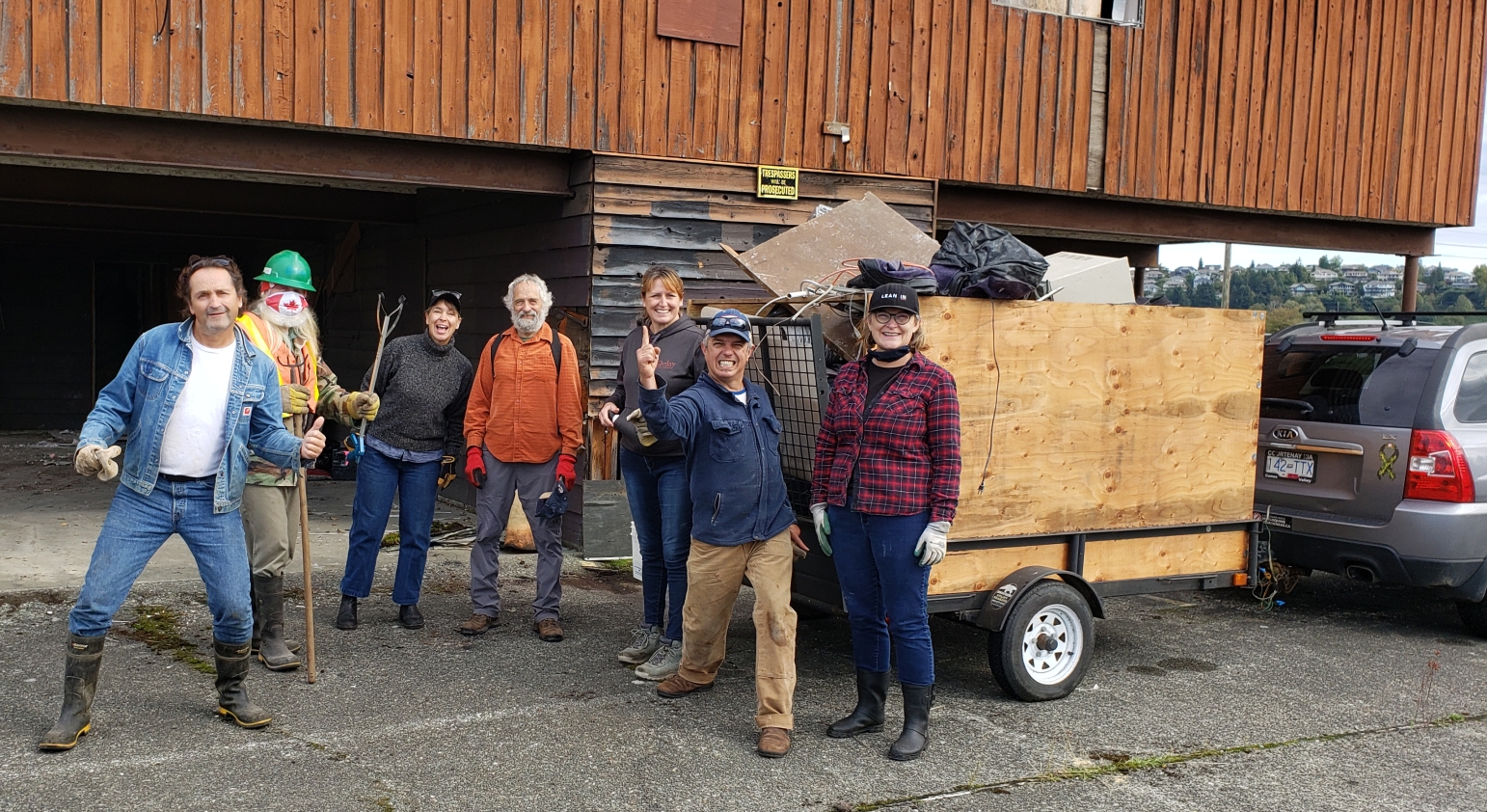
Volunteers loading garbage from the Kus-kus-sum site
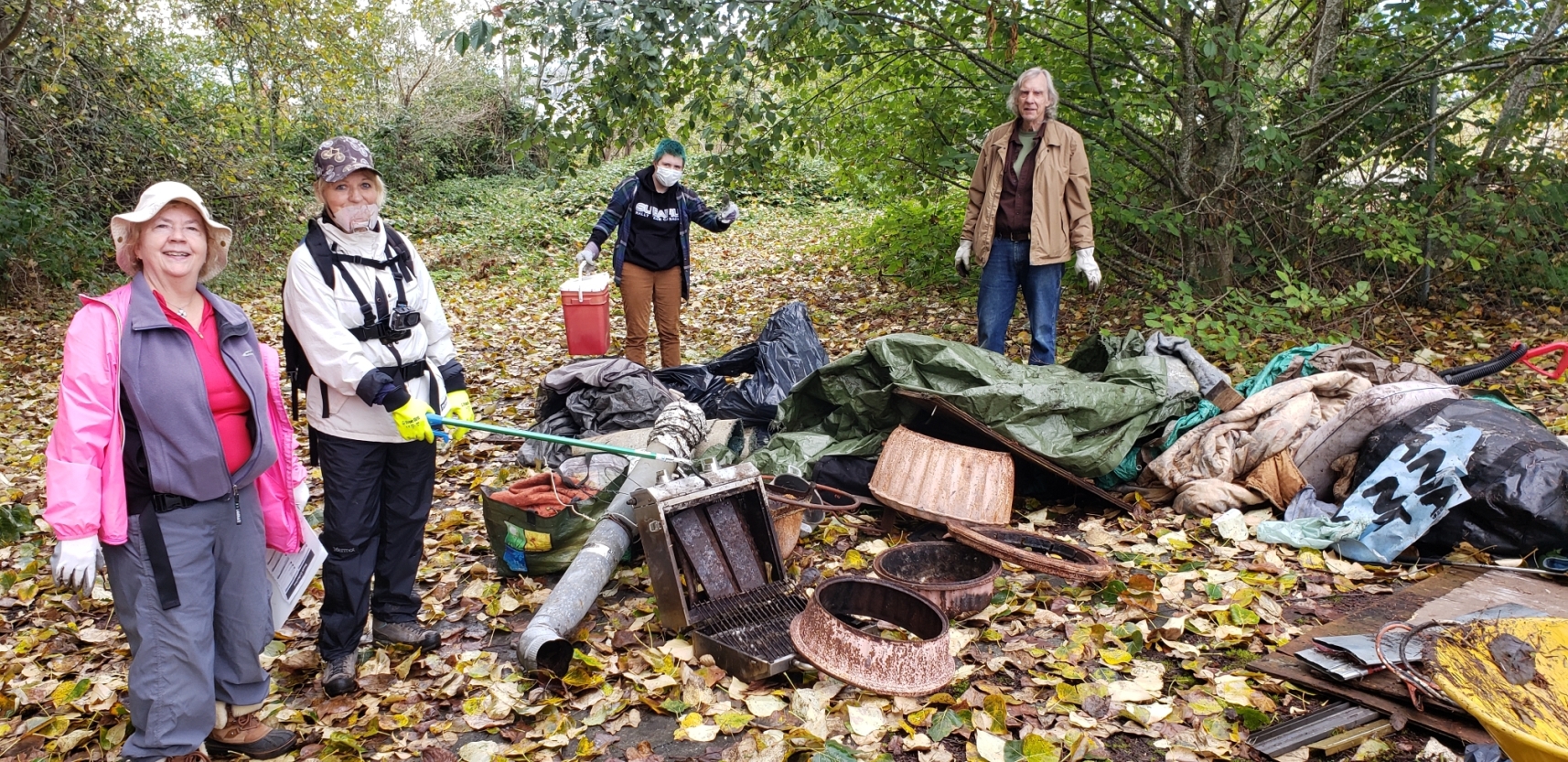
Garbage collected from Hollyhock Flats
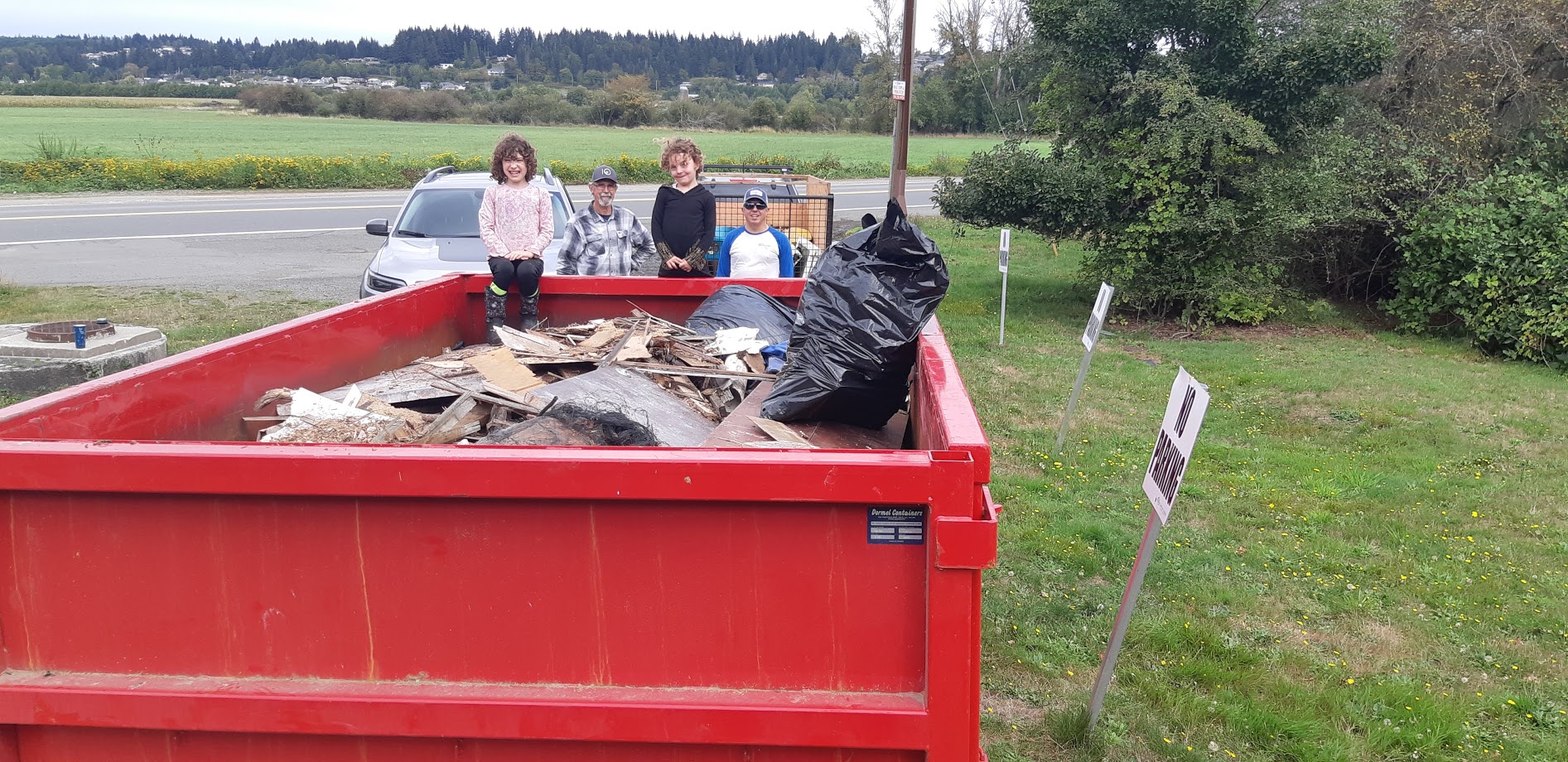
Full red dumpster at the end of the day
On Saturday, September 26, forty volunteers pitched in to collect garbage at Kus-kus-sum and Hollyhock Flats as part of the Great Canadian Shoreline Cleanup. People from all walks of life joined Project Watershed in tackling this kilometer of shoreline. “Members of the Rotary Club of Comox Valley (#CVRC) were happy to lend a hand, many people made light work of this big task” said Pieter Vorster, Public Image Director of the Comox Valley Rotary Club. The photos and short video (thanks Sue Vince!) captured from the day illustrate just how industrious it was.
Kus-kus-sum is the concrete area that was once a sawmill located next to the 17th Street bridge along Comox Road. Hollyhock Flats is the neighboring green property that stretches south to the Rotary Viewing Area. Much of the waste came from camps set up on these two properties by people without homes. It is important to remember that these people face a variety of challenges and have very few options. Regardless of their situation they are people and deserve respect. Until our society has a better way of supporting these people, cleaning up abandoned camps is a way we can help and lessen the impact on our environment at the same time (check out 35 Ways To Help the Homeless for more ideas).
A large amount of waste was collected over the two hour event. “We estimate that we gathered some 500 lbs of garbage, filling the red dumpster that was left for us in front of the pump station, and that doesn’t include the large pile of metal that went to be recycled,” reports Caila Holbrook, Manager of Fundraising, Outreach and Mapping. Project Watershed would like to thank all the volunteers who helped with the cleanup and the Comox Valley Regional District which generously picked up and disposed of everything.
Dan Bowen, Project Watershed’s Technical Director, was thankful for all the help. Referring to Project Watershed’s initiative to acquire the Kus-kus-sum property and restore it to natural habitat, he said “Next on the agenda for Kus-kus-sum is restoration!”. The next fundraising deadline is November 30, 2020.
About Kus-kus-sum
Related Posts
Mallard Creek Restoration Update for 2024
Restoration work in Mallard Creek will continue this year, including invasive removal, restoring connectivity, and trial planting of a new riparian species. Volunteer events starting in September 2024.
Volunteer at Kus-kus-sum Chamber of Commerce Event
We are showing Kus-kus-sum off to businesses in the Valley through a Chamber Business to Business event. We are looking for a few volunteers to assist with this event.
Coastal Plant Monitoring
Get involved with our new vegetation community science monitoring program!
Spring Field Trips
Throughout May and June Project Watershed will be taking elementary school classes out on field trips to learn about estuary and coastal ecology and to assist with planting and plant maintenance.
Working Together to Identify Forage Fish Spawning Beaches
This year marks the 5th year of a partnership between Comox Valley Project Watershed Society and North Island College on a long-term study to examine intertidal spawning habitats of forage fish in the northern Salish Sea.
Glen Urquhart Update – Spring 2024
Latest news from Glen Urquhart restoration progress for spring 2024.