
Technician Report – Tuesday, Sept 21th

Sediment barrier installation ~ By Jamie Lund
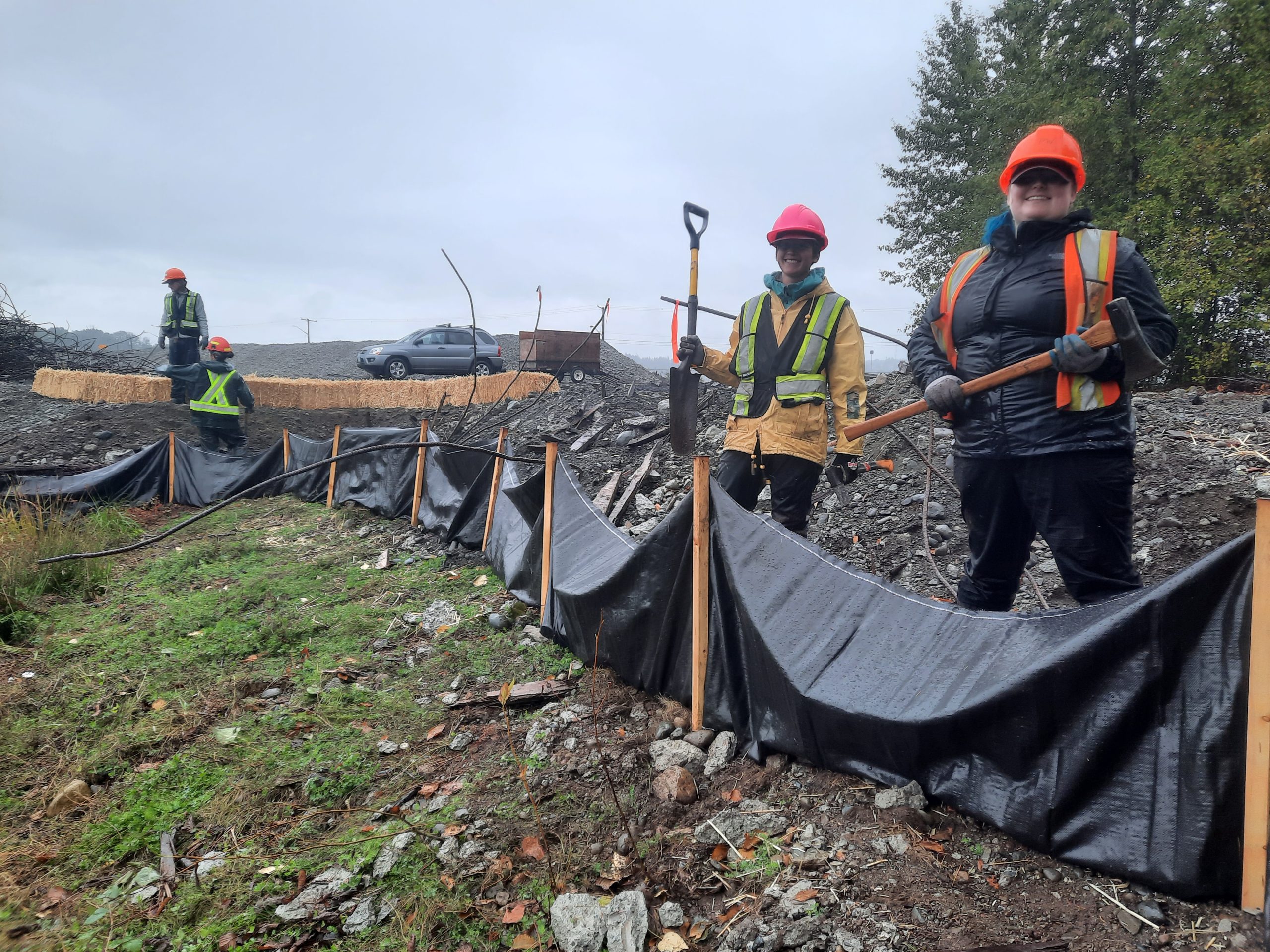
Kus-kus-sum sediment barrier ~ By Caila Holbrook
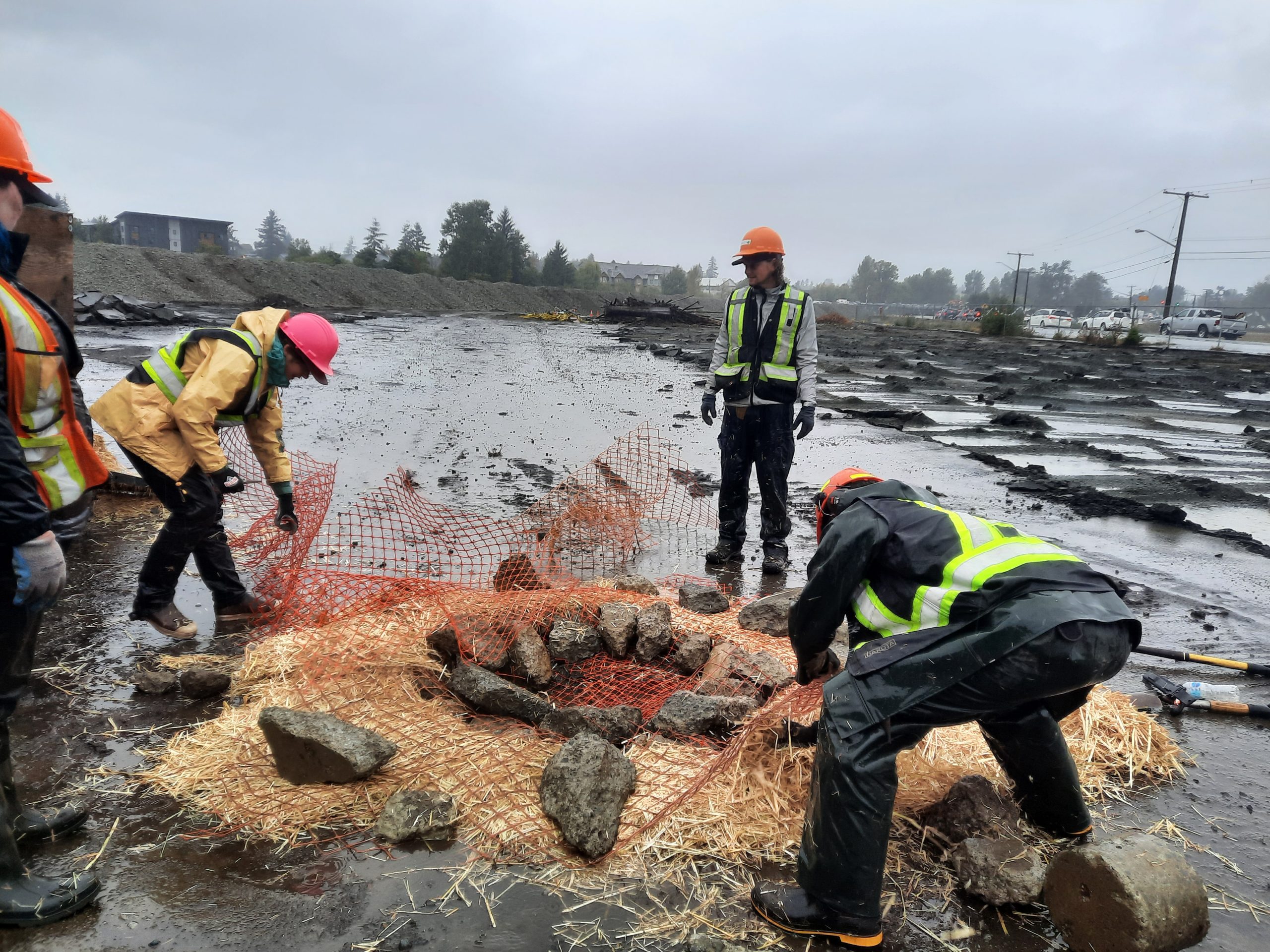
Runoff control ~ By Caila Holbrook
As the concrete is removed, crushed, and piled by machines the wood and metal material is sorted out. Some smaller pieces are missed and get mixed in with the crush. Our technician team has been sorting out these smaller pieces and compiling them for recycling. We are trying to maximize reusing and recycling the material from the site. There is also other debris that we are continually picking up to ensure it doesn’t go into the river.
The rain came in full force as we moved into September. Due to the large potential for runoff at Kus-kus-sum, our technician team helped install some sediment fencing. The far left corner of the site has a significant slope that can enter the river. Our team fenced this area and added a hay bale barrier to minimize wash out of sediment. This will protect the river from high turbidity and particle loads in the interim. Project Watershed, along with environmental consultants, are creating a long term erosion control plan to protect the river over the rainy, stormy winter months.
One area of the Kus-kus-sum site had some fencing damage. The damage resulted in a large hole where people could access the site. The technician team helped instal some temporary fencing until a more permanent one can be put in.
The technician team had helped with the removal of vegetation on the site at the beginning of the summer. Being able to see the drastic change between the original site and what it looks like now with the cement removed, was really interesting.
With the help of the Healthy Watersheds Initiative funding Project Watershed has hired environmental technicians to assist with our projects over the summer and early fall. The Healthy Watersheds Initiative is delivered by the Real Estate Foundation of BC and Watersheds BC, with financial support from the Province of British Columbia as part of its $10-billion COVID-19 response. Jamie Lund, one of these technicians, will be posting a brief report every Tuesday to update the Project Watershed community on what they have been up to.
Related Posts
Mallard Creek Restoration Update for 2024
Restoration work in Mallard Creek will continue this year, including invasive removal, restoring connectivity, and trial planting of a new riparian species. Volunteer events starting in September 2024.
Volunteer at Kus-kus-sum Chamber of Commerce Event
We are showing Kus-kus-sum off to businesses in the Valley through a Chamber Business to Business event. We are looking for a few volunteers to assist with this event.
Coastal Plant Monitoring
Get involved with our new vegetation community science monitoring program!
Spring Field Trips
Throughout May and June Project Watershed will be taking elementary school classes out on field trips to learn about estuary and coastal ecology and to assist with planting and plant maintenance.
Working Together to Identify Forage Fish Spawning Beaches
This year marks the 5th year of a partnership between Comox Valley Project Watershed Society and North Island College on a long-term study to examine intertidal spawning habitats of forage fish in the northern Salish Sea.
Glen Urquhart Update – Spring 2024
Latest news from Glen Urquhart restoration progress for spring 2024.