Happy Technician Tuesday! This will be our final tech post of the year. We’d like to reflect on the work we’ve done in 2021.
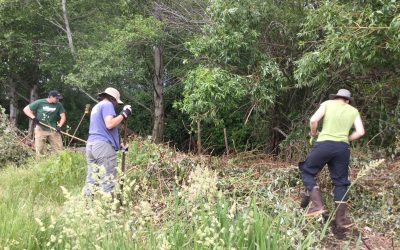
Technician Report – Tuesday, December 14th
read more
Working with the K’ómoks Nation towards Q’waq’wala7owkw on their unceded territory.

Working with the K’ómoks Nation towards Q’waq’wala7owkw on their unceded territory.
Happy Technician Tuesday! This will be our final tech post of the year. We’d like to reflect on the work we’ve done in 2021.
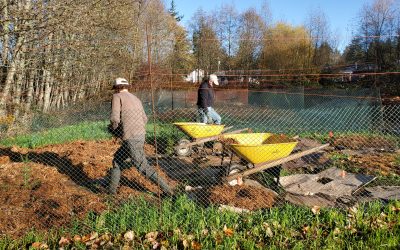
Happy Technician Tuesday! Our technician team has been leading volunteer planting events at Glen Urquhart Creek.
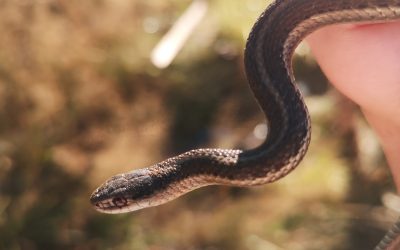
Happy Technician Tuesday! While working around Glen Urquhart stream, our Technician team has experienced numerous encounters with fauna using the site. The presence of wildlife at Glen Urquhart further justifies the need to preserve and restore the area.
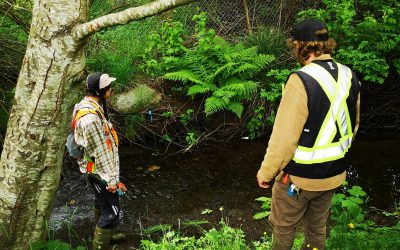
Happy Technician Tuesday! Earlier this year, our technician team surveyed Glen Urquhart stream to assess its profile for future stream restoration projects. While Glen Urquhart has been highly modified and impacted, salmon and other fish species do utilize it. Improved habitat in this area will directly benefit those species.
[av_one_half first min_height='' vertical_alignment='' space='' custom_margin='' margin='0px' padding='0px' border='' border_color='' radius='0px' background_color='' src='' background_position='top left' background_repeat='no-repeat' animation='' mobile_display='']...
Hello Volunteers, Project Watershed in partnership with CV Nature and the Courtenay Air Park are removing invasive blackberry next Tuesday. This is a call out for volunteers to help with the removal of invasive species. Date: June 06, Tuesday Time: 830 am - 1130 am...
Update on Mallard and Glen Urquhart Stream SurveysGlen Urquhart and Mallard Creeks both flow into Dyke Slough on the north side of the K'ómoks Estuary. The Dyke Slough in turn drains into Hollyhock Flats one of the most productive natural habitats left in the K'omoks...
Open House The Staff of the Puntledge River Hatchery Invite you to: Journey behind the scenes, View returning adult salmon, Watch us sort and handle live fish, View Volunteer Community Group displays. Sunday, October 18, 10 am - 3 pm 38...
Courtenay, BC, October 5, 2015– The annual Great Canadian Shoreline Cleanup event is upon us and Project Watershed will once again be undertaking a clean-up of the Simms Park waterways. The work party will take place on October 11th, from 10 AM until noon, at which...
Project Watershed's Salt Marsh Project at Royston was featured in the March 2015 Issue of StreamTalk. We encourage you to visit their website and read or download the entire issue there. For your convenience we have posted the article related to our project as...
Image Caption: The huge Thompson River has a drainage area of more than 50,000 square kilometres. British Columbia has tens of thousands of rivers that contribute greatly to our quality of life, Mark Angelo writes. [av_hr class='short' height='50' shadow='no-shadow'...
Streamkeepers is a fun and educational 2½ day introduction to stream stewardship which will be taught by Michele Jones.